1
行と列が盤面の骨格を作る
クイーンズの各レベルは、各行と各列に置けるクラウンは1つだけ、という約束から始まります。このルールが盤面にきれいなリズムを作ります。1つ置くと、その行と列全体が使えなくなり、ほかの候補も同時に見えやすくなります。初心者はまずこの条件からスキャンすると迷いにくくなります。
無料のオンラインロジックパズル
色の領域を読み解き、クラウンを1つずつ置いていくクイーンズ:論理パズル。
すぐに開始できます。Googleでログインすると、進行状況、ベストタイム、解除したレベルを保存できます。
遊び方
クイーンズは、始めるのは簡単で、盤面が広がるほど読みごたえが増す論理パズルです。目的は、色分けされたグリッドにクラウンを置き、各行・各列・各色の領域にちょうど1つずつクラウンが入るようにすること。クラウン同士は斜めを含めて隣り合えません。まず置けないマスを消し、行・列・色領域の条件がそろった場所だけに置くのが基本です。
各レベルは、小さな推理の盤面です。クラウンはただ置く駒ではなく、残りの盤面を変える手がかりでもあります。1つ置けば、その行と列は使えなくなり、その色領域は満たされ、周囲の接するマスも危険になります。この連鎖が、クイーンズをテンポよく、同時に戦略的なクラウンパズルにしています。
クイーンズ系のパズルが初めてなら、置く前に一手ずつ理由を確認しましょう。その手はどの行を決めるのか、どの列を閉じるのか、どの領域を満たすのか、近くのどのマスを消すのか。理由が言える手ほど強い手です。
各行と各色領域に、クラウンをちょうど1つずつ置きます。クリアには、すべての領域が1回ずつ満たされている必要があります。
同じ行や列に2つのクラウンは置けません。1つ置くたびに、候補マスが一気に絞られます。
クラウン同士は斜めを含めて接することができません。置いた瞬間、周囲のマスは候補から外れます。
詳しいルール
ルールは短いですが、行、列、色領域、隣接禁止が重なるところでパズルは面白くなります。強い解き方は、いちばん情報量の多い条件から読むことです。
行と列が盤面の骨格を作る
クイーンズの各レベルは、各行と各列に置けるクラウンは1つだけ、という約束から始まります。このルールが盤面にきれいなリズムを作ります。1つ置くと、その行と列全体が使えなくなり、ほかの候補も同時に見えやすくなります。初心者はまずこの条件からスキャンすると迷いにくくなります。
色領域が第二の層になる
色領域があることで、クイーンズは単なる行と列のパズルではなくなります。領域は複数の行にまたがったり、別の色を回り込んだり、隅に小さくまとまったりします。色は飾りではなく、それぞれが独立した条件です。強い一手は、残っている行・列と色領域の重なりが少ない場所に現れやすいです。
隣接禁止が局所的な圧力を生む
現代的なクイーンズでは、チェスのような長い斜め攻撃を考える必要はありません。重要なのは、クラウン同士が接してはいけないという近距離のルールです。上下左右と斜めの隣接マスが塞がるため、離れた答えに見えても、1つのクラウンが別の領域を静かに押し出すことがあります。行き詰まったら、近くのマスを見直すと理由が見えてきます。
完璧な手順より、有効な完成形が大事
クイーンズのレベルには、複数の正しい解き方が存在する場合があります。それで問題ありません。大切なのは、1つの隠された手順を再現することではなく、すべてのルールを満たす盤面を作ることです。推理で解き、よりきれいなタイムを狙って再プレイし、最後の盤面が行・列・領域・隣接禁止を満たしていればクリアです。
クイーンズ:論理パズル
クイーンズは、クラウンの配置、色領域、候補の消去を組み合わせて解く視覚的なロジックパズルです。古典的なクイーン配置パズルに近い考え方を持ちながら、現代的なクイーンズ puzzleのルールはよりコンパクトで、ボードゲームのように遊べます。チェスの定跡や長い斜め攻撃を覚える必要はありません。カラフルな盤面を観察し、安全に置けるマスを判断し、1手ずつ残りの選択肢を減らしていきます。
playqueensgameは、このクラウンパズルを無料で遊べるオンラインゲームにしたものです。序盤の盤面でルールを自然に覚え、難しいレベルでは行、列、色領域、隣接禁止を同時に考える必要があります。クイーンズ puzzle game onlineを探して来た人が、まず遊び、そのあと攻略を学べるページです。
クイーンズが幅広いロジックパズル好きに合う理由はここにあります。気軽に遊ぶ人は、色の盤面、短いレベル、すぐ返ってくる手応えを楽しめます。じっくり解く人は、確定マスを探し、候補を比べ、再プレイでタイムを詰められます。同じルールなのに、見た目は軽く、考え方は深いままです。
オンラインクイーンズ puzzleガイド
よいクイーンズ:論理パズルは、盤面を置いてクリックを待つだけでは足りません。初めての人には何を考えればよいかが伝わり、慣れた人にはすぐ動けることが大切です。そのため、ゲーム本体はホームの上部に置き、ルールや攻略の説明はすぐ下にまとめています。まず遊び、必要になったらスクロールして詳しい解き方を読めます。
クイーンズを探す人の目的は意外と分かれます。すぐ開けるオンラインゲームを探している人、色領域のルールを確認したい人、論理パズルとしての戦略を知りたい人、N-クイーンズのような古典パズルとの違いを見たい人。このページは、実際に遊べる盤面を中心にしながら、それぞれの目的に必要な文脈を用意しています。
流れ
段階的に
最初の一手から難しいレベルへ
よいクイーンズ puzzle gameは、盤面を見せてクリックを待つだけでは不十分です。新しいプレイヤーが何を求められているかを理解し、慣れたプレイヤーは素早く解ける必要があります。そのため、ゲームはホーム上部に置き、学習コンテンツはそのすぐ下に配置しています。
クイーンズを検索する人の目的は一つではありません。すぐ遊べるオンラインゲームが欲しい人もいれば、色領域の仕組みを知りたい人もいます。LinkedIn風のロジックチャレンジや古典的なN-クイーンズと比べたい人にも、必要な説明が届くようにしています。
ランダムなクイーンズ盤面も楽しいですが、なめらかなレベル順のほうが学びやすいです。最初のレベルではルールが見えやすく、中盤では大きめの領域や分かりにくい配置が出てきます。後半では複数の手がかりを同時に組み合わせる必要があります。
playqueensgameはブラウザで動くので、短いロジック休憩にも向いています。1つのクイーンズレベルを解く、クリア済み盤面を再プレイする、あとで戻って解除済みの進行を続ける。少しずつ練習できる形式です。
クイーンズをオンラインで遊ぶ理由
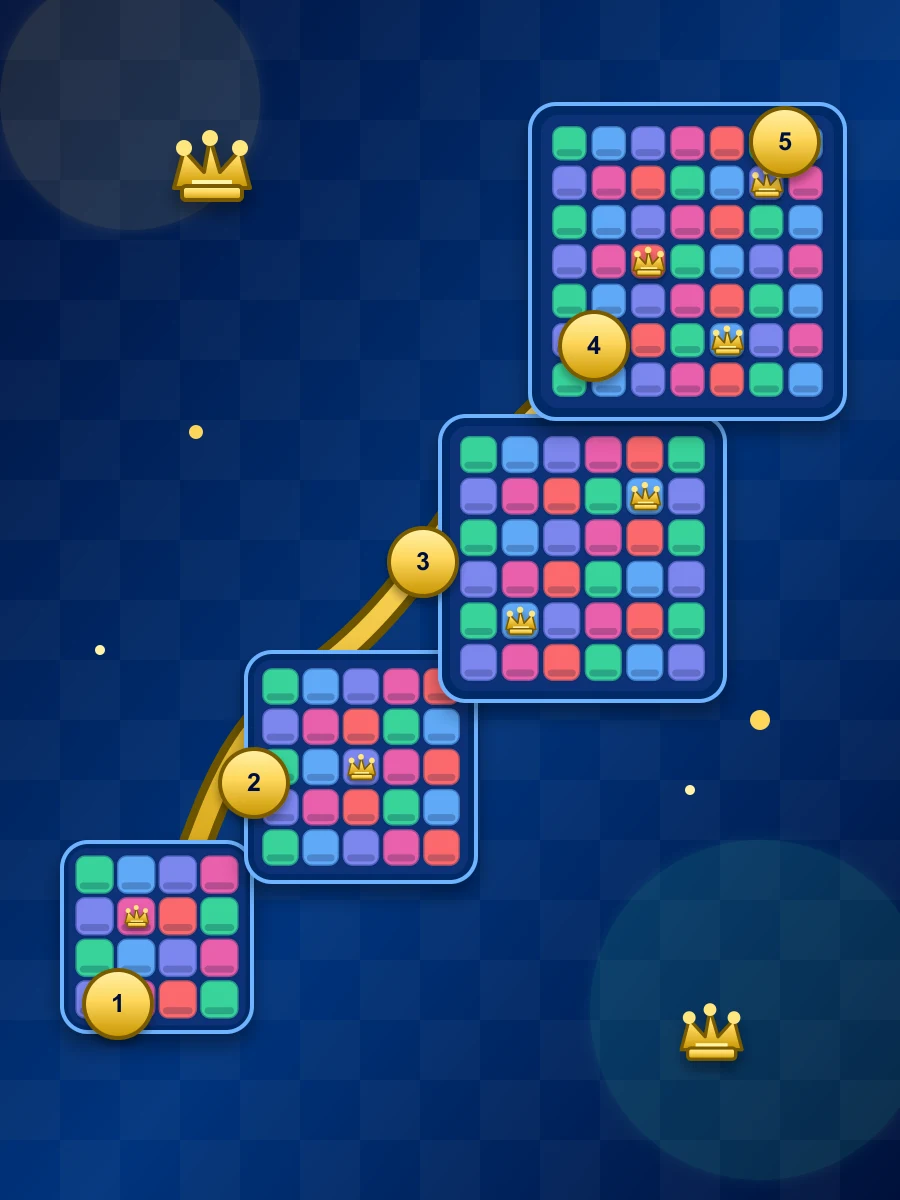
クイーンズ系のゲームには、ランダムに盤面を選ぶだけのものもあります。このバージョンは、オンラインで遊べる段階式のクイーンズ gameです。やさしい盤面から始め、少しずつ難しいパズルを解除し、クリア済みレベルはよりきれいな解き方や速いタイムを狙って再プレイできます。アカウントなしでローカルに遊ぶことも、Googleでログインして解除レベルとベストタイムを保存することもできます。
段階式の構成は、検索して来た人にも分かりやすい形です。無料のクイーンズ online gameを探しているなら、すぐ遊べることが大事です。クイーンズ puzzle rulesを知りたいなら、はっきりした説明が必要です。クイーンズ strategyを探しているなら、実際に使える解き方が必要です。このページは、ゲーム本体を隠さずに、それらのニーズをまとめています。
ダウンロードも設定も不要。ブラウザで無料のクイーンズをすぐに遊べます。最初のレベルはすぐ開けます。
小さく読みやすい盤面から、より丁寧な推理が必要なクイーンズ puzzleレベルへ進みます。
レベルをクリアしたらタイムを共有し、同じクイーンズ盤面に友だちを招待できます。
クイーンズ攻略
クイーンズ攻略の基本は、勘で置かないことです。よい解き方は制約を読むことから始まります。行だけを見ると空いていても、色領域と比べると置けない場合があります。色領域が広く見えても、近くのクラウンが斜めの隣接マスを消している場合があります。盤面が大きくなるほど、Xマークは視覚的な混乱を防ぐ大事な道具になります。
詰まったときは、いちばん多くの情報をくれるルールを探します。ある行の候補が少ないときは行のルールが強く、周囲のブロックに触れている色領域では領域のルールが強くなります。隣接禁止が連鎖を作ることもあります。1つのクラウンが斜めのマスを消し、それが領域を確定し、さらに列を解く。これがクイーンズ 論理パズルの面白さです。
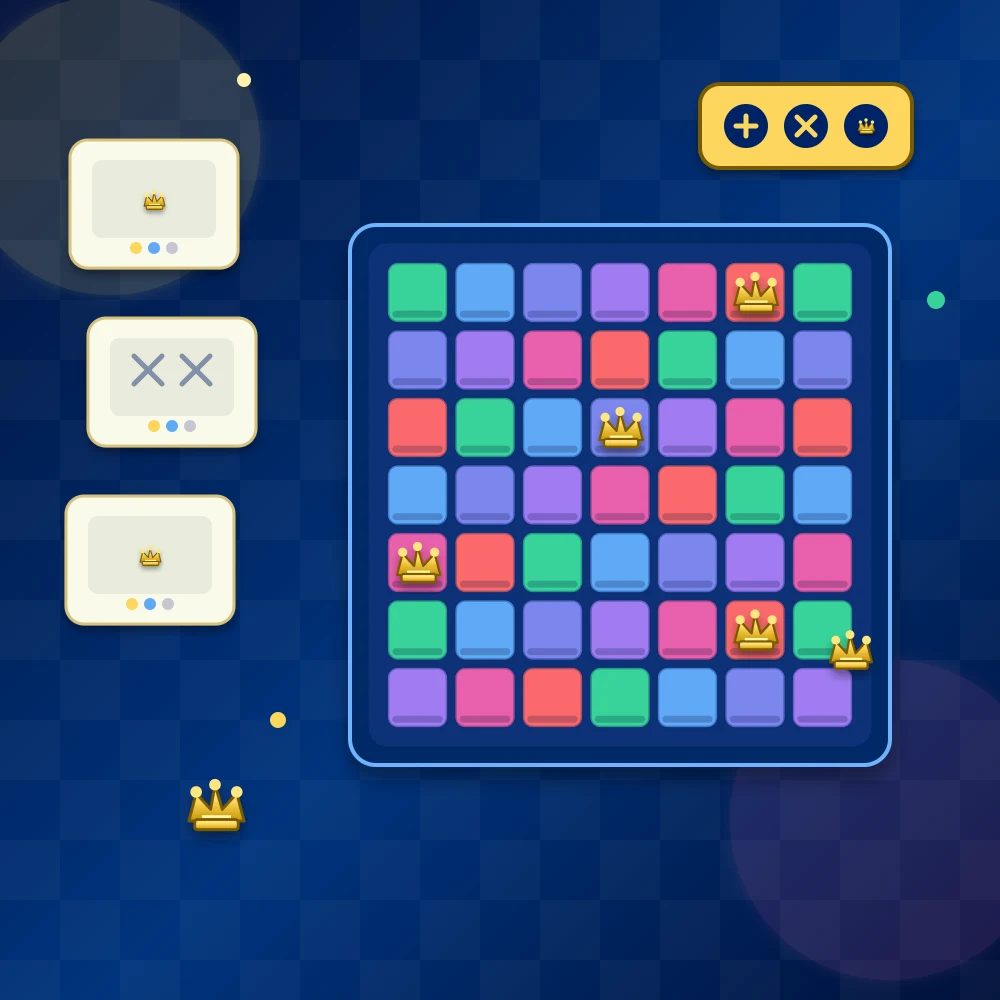
現実的な候補が少ない色領域を探します。行、列、近くのクラウンで囲まれている領域は、次の確定手を見せてくれることがよくあります。
クラウンを置けないマスに印を付けます。すべてを一気に塗るのではなく、証明できた候補消しを残すために使います。
クラウンを置けるのは、行、列、領域の条件がすべて通る場合だけです。1つのルールだけで判断するとミスが増えます。
現代的なクイーンズでは、クラウン同士の接触が重要です。各クラウンは斜めを含む周囲8マスを塞ぎます。
まず各色領域を見て、候補が2つか3つしかない場所を探します。次に、その候補を行と列で比べます。三つ目に、クラウンの隣接で不可能になったマスへXを付けます。最後に、すべてのルールを生き残ったマスだけにクラウンを置きます。このリズムがあると、後半の忙しい盤面でもクイーンズを落ち着いて読めます。
プレイヤーの声
クイーンズは、すぐ開けて、ルールが分かりやすく、解けたときに気持ちいいほど長く遊ばれます。多くの人はまずプレイしたいので、ゲームエリアはページの最初に置いています。下のガイドは、新しいパズルプレイヤーがルールを理解し、解き方を伸ばすためのものです。
このタイプのクイーンズ puzzleでよく聞く魅力は、落ち着いた観察が報われることです。盤面は単純に見えても、1つの色領域がグリッド全体の見方を変えることがあります。その瞬間が面白いところです。ゲームは解けるだけの情報を渡しながら、駒、色、空きマスの関係に気づくことを求めます。
だからこそ、インターフェースは手がかり表のように固くせず、パズル玩具として触れる雰囲気を残しています。カラフルなタイルで領域を覚えやすくし、クラウンで進行を見えるようにし、タイマーで再プレイの目標を作ります。よいオンラインクイーンズは、まず楽しいパズルであり、そのあとにタイムを詰める遊びになります。
「クイーンズを開いて1レベル解き、あとで戻って続きができるのがいい。長いチュートリアルを読まなくても始められる。」
「色の領域があるので盤面を見渡しやすい。クラウンが近くのマスを塞ぐと、次の一手にちゃんと理由がある感じがする。」
「レベル順が大事。序盤でルールを覚えて、後半のクイーンズではゆっくり盤面を読む必要が出てくる。」
クイーンズ攻略ブログ
短いルール説明だけでは足りないときは、詳しいガイドを読めます。クイーンズ rules、初心者向けのコツ、論理パズルとしての解き方を探しているプレイヤー向けの記事です。
ブログは、レベルをクリアしたあとにも自然に進める場所です。ルール、例題、攻略の考え方を別のサイトで探し直さなくても、同じルールセットをより詳しく説明するクイーンズガイドへ移れます。
クイーンズFAQ
クイーンズは、色分けされたグリッドにクラウンを置き、行、列、色領域、隣接禁止のルールを守って解く視覚的なロジックパズルです。目的は、勘や連打ではなく推理で盤面を完成させることです。1つクラウンを置くたびに残りの盤面が変わるため、小さな論理判断がつながっていくパズルになります。
レベルを選び、色領域を観察し、各行・各列・各領域にちょうど1つずつクラウンが入るように置きます。使えないマスはXで印を付け、候補がはっきりするまで絞り込みます。オンラインでは、手戻し、リセット、再プレイ、解除済みレベルの移動ができるので、紙に盤面を書くより手早く進められます。
はい。ブラウザでクイーンズを無料でプレイできます。Googleログインは解除済みレベルとベストタイムの保存に使いますが、最初のレベルはすぐ始められるように作られています。アプリのダウンロードやパズルパックのインストール、事前のアカウント作成は必要ありません。
いいえ。playqueensgameは、いつでも遊べる独立したクイーンズ体験です。視覚的なロジックチャレンジという大きなスタイルは近いですが、LinkedInの公式ゲームや解答アーカイブではありません。ここでは、レベルを解除し、盤面を再プレイし、ベストタイムを保存しながら、自分のペースでルールを練習できます。
はい。クイーンズのレベルには、複数の有効な解答が存在する場合があります。クリアに必要なのは、各行に1つ、各列に1つ、各色領域に1つ、そしてクラウン同士が接しないという全ルールを満たす盤面です。大事なのは、1つの答えを暗記することではなく、自分の配置が正しいと示せることです。
いちばん大事なのは、置けないマスを先に消すことです。狭い色領域を見つけ、行と列で比べ、斜めを含む隣接マスに注意し、論理的な理由があるときだけクラウンを置きます。詰まったら、しばらくクラウンを置かず、Xマークで不可能なマスを記録してください。ゆっくり整えた盤面ほど、後で速く解けます。